We have compiled a list of manufacturers, distributors, product information, reference prices, and rankings for Mass spectrometer.
ipros is IPROS GMS ・ IPROS One of the largest technical database sites in Japan that collects information on.

Mass spectrometer Product List and Ranking from 16 Manufacturers, Suppliers and Companies | IPROS GMS

Last Updated: Aggregation Period:Sep 02, 2026~Sep 29, 2026
This ranking is based on the number of page views on our site.

Mass spectrometer Manufacturer, Suppliers and Company Rankings

Last Updated: Aggregation Period:Sep 02, 2026~Sep 29, 2026
This ranking is based on the number of page views on our site.

  1. 一般財団法人材料科学技術振興財団 MST Tokyo//Testing, Analysis and Measurement
  2. プレッパーズ 本社 Shizuoka//others
  3. ATONARP INC. Tokyo//Electronic Components and Semiconductors
  4. 4 ブルカージャパン マイクロバイオロジー&インフェクション・ダイアグノスティクス事業部 微生物同定・菌株識別 Kanagawa//Testing, Analysis and Measurement
  5. 5 山善 Osaka//Machine elements and parts

Mass spectrometer Product ranking

Last Updated: Aggregation Period:Sep 02, 2026~Sep 29, 2026
This ranking is based on the number of page views on our site.

  1. Rapid Microbial Identification "MALDI Biotyper" ブルカージャパン マイクロバイオロジー&インフェクション・ダイアグノスティクス事業部 微生物同定・菌株識別
  2. [Analysis Case] Structural Analysis of Fluoropolymer by LDI-MS 一般財団法人材料科学技術振興財団 MST
  3. [Analysis Case] Imaging of Lipids 一般財団法人材料科学技術振興財団 MST
  4. MS system "Smart Flash MS System" 山善
  5. 4 Application Data: Example of Ionic Liquid Analysis: Application to Ion Pair Reagents プレッパーズ 本社

Mass spectrometer Product List

1~30 item / All 36 items

Displayed results

Application Example: Mass Spectrometry Technology and Data Acquisition

You can obtain reproducible results even with the minimum level of ion signature! We are currently offering a comprehensive catalog and case studies.

I will introduce examples of applications for mass spectrometry technology and data acquisition. In mass spectrometry, data capture is quite challenging, but by using a properly designed digitizer, this challenge can be significantly alleviated, allowing for reproducible results even at minimal levels of ion signatures. The MS (Mass Spectrometry) system enables fundamental analysis of the chemical composition of substance samples. It is highly regarded for its high specificity and qualitative and quantitative capabilities. [Overview (Excerpt)] ■ Mass Spectrometry ■ Components of the MS System ■ Performance Requirements of the MS System ■ MS Digitizer Related Functions ■ Low-Speed Response Systems ■ High-Speed Response Systems *For more details, please feel free to contact us.

  • Other electronic parts
  • Mass spectrometer

Added to bookmarks

Bookmarks list

Bookmark has been removed

Bookmarks list

You can't add any more bookmarks

By registering as a member, you can increase the number of bookmarks you can save and organize them with labels.

Free membership registration

Mass Spectrometry Instruments for Life Sciences (Comprehensive Lineup)

Perfect for analyzing complex applications! Download our comprehensive lineup of mass spectrometry devices that combine high precision, speed, and ease of use for free!

LECO's equipment is used daily around the world for the analysis of highly complex samples in today's environment. We provide instrument configurations tailored to your needs for sample analysis in various fields, including food, fragrances, petroleum, environmental issues, forensic science, materials science, and metabolomics. LECO's instruments are highly regarded for their accuracy, processing speed, and ease of use. Our quality policy is certified to ISO-9001:2008. 【Product Lineup】 ○ Comprehensive two-dimensional gas chromatography time-of-flight mass spectrometer "Pegasus 4D-C GC×GC-TOFMS" ○ Benchtop time-of-flight mass spectrometer "Pegasus BT 4D" ○ Ultra-high resolution gas chromatography time-of-flight mass spectrometer "Pegasus GC-HRT+4D" ● For more details, please download the catalog or contact us.

  • Analytical Equipment and Devices
  • Food Testing/Analysis/Measuring Equipment
  • Mass spectrometer

Added to bookmarks

Bookmarks list

Bookmark has been removed

Bookmarks list

You can't add any more bookmarks

By registering as a member, you can increase the number of bookmarks you can save and organize them with labels.

Free membership registration

Analysis of pigments and polymers using MALDI-TOFMS.

Detect the mass number as an absolute value! You can obtain information about the composition of the compound.

We conduct "pigment and polymer analysis using MALDI-TOFMS." With "MALDI-TOFMS," it is possible to obtain molecular weight information for insoluble substances such as pigments, molecular weight information for synthetic polymers, and information on terminal groups. Please feel free to contact us for mass confirmation of synthetic compounds or for structural analysis in combination with other analytical methods. 【Features】 ■ Adoption of Matrix-Assisted Laser Desorption Ionization Mass Spectrometry (MALDI) ■ Ability to obtain information regarding the composition of compounds ■ Suitable for analyzing polymers that are small compared to GPC and large compared to LCMS ■ Mass numbers are detected as absolute values *For more details, please refer to the PDF document or feel free to contact us.

  • Contract measurement
  • Contract Inspection
  • Mass spectrometer

Added to bookmarks

Bookmarks list

Bookmark has been removed

Bookmarks list

You can't add any more bookmarks

By registering as a member, you can increase the number of bookmarks you can save and organize them with labels.

Free membership registration

[Document] Mass Spectrometry Guide

Analyze using information obtained from various analytical methods such as functional groups and skeletal structures! Introducing the mass spectrometry guide.

This document introduces a guide to mass spectrometry. In the analysis of organic compounds, information is obtained and analyzed from various analytical methods based on the functional groups, skeletal structures, and masses of the compounds. There are various methods for analyzing the mass of compounds, each with its own strengths in terms of the type of analysis and targets. Additionally, these methods can be selectively used according to the application or combined with other analytical techniques to obtain the necessary information. [Contents] ■ Methods mainly used in mass spectrometry - GC-MS - LC-MS - MALDI-TOFMS - GPC *For more details, please refer to the PDF document or feel free to contact us.

  • Analytical Equipment and Devices
  • Food Testing/Analysis/Measuring Equipment
  • Mass spectrometer

Added to bookmarks

Bookmarks list

Bookmark has been removed

Bookmarks list

You can't add any more bookmarks

By registering as a member, you can increase the number of bookmarks you can save and organize them with labels.

Free membership registration

[Analysis Case] Structural Analysis of Fluoropolymer by LDI-MS

Structural analysis of fluorine-based grease, fluorine-based lubricants, and fluorine-based oils.

Fluoropolymer materials are chemically stable and possess various properties, making them widely used in industrial machinery, semiconductors, and electronics. LDI-MS (Laser Desorption Ionization Mass Spectrometry) is an analytical method that can ionize fluoropolymers with molecular weights of around several thousand while maintaining their molecular structure, allowing for the determination of the repeating units and molecular weights of fluoropolymers, as well as the estimation of end group compositions and structures. This document presents a case study on the structural analysis of perfluoropolyether (PFPE), which is used as a base oil in lubricants and heat transfer fluids. Measurement method: MALDI-MS Product field: Polymer materials Analysis purpose: Composition evaluation and identification, chemical bonding state evaluation For more details, please download the document or contact us.

Added to bookmarks

Bookmarks list

Bookmark has been removed

Bookmarks list

You can't add any more bookmarks

By registering as a member, you can increase the number of bookmarks you can save and organize them with labels.

Free membership registration

[Analysis Case] Imaging of Brain Lipids

Lipid mapping of mouse brain using MALDI-MS.

MALDI-MS (Matrix-Assisted Laser Desorption Ionization Mass Spectrometry) is a method that allows for the detection and imaging of organic components in their molecular ion form. In particular, MALDI imaging is effective for evaluating the distribution of biological components and substances administered to living organisms in pharmacokinetic studies and pharmaceutical research and development. MST can provide a consistent process from sample preparation to measurement. This document presents an example of analysis where lipids were imaged using MALDI-MS, starting from the preparation of mouse brain slices.

  • img_c0662_2.jpg
  • img_c0662_3.jpg
  • img_c0662_4.jpg
  • img_c0662_5.jpg
  • Contract measurement
  • Animal cells
  • Imaging and image analysis equipment
  • Mass spectrometer

Added to bookmarks

Bookmarks list

Bookmark has been removed

Bookmarks list

You can't add any more bookmarks

By registering as a member, you can increase the number of bookmarks you can save and organize them with labels.

Free membership registration

[Analysis Case] Imaging of Lipids

Imaging of lipids in mouse testis! Introducing cases measured with TOF-SIMS and MALDI-MS.

Our organization conducts lipid imaging. TOF-SIMS excels in low-mass components and enables imaging with high spatial resolution. On the other hand, MALDI-MS specializes in high-mass components and offers a wide variety of lipids that can be imaged. Here, we present examples of measurements taken with TOF-SIMS and MALDI-MS, using lipid imaging mass spectrometry results from mouse testes as a case study. [Measurement Methods] ■ [TOF-SIMS] Time-of-Flight Secondary Ion Mass Spectrometry ■ [MALDI-MS] Matrix-Assisted Laser Desorption Ionization Mass Spectrometry *For more details, please download the PDF or feel free to contact us.

Added to bookmarks

Bookmarks list

Bookmark has been removed

Bookmarks list

You can't add any more bookmarks

By registering as a member, you can increase the number of bookmarks you can save and organize them with labels.

Free membership registration

MS system "Smart Flash MS System"

Mass spectrometry detection medium pressure fractionation chromatography system!

This product is an easy-to-use MS system optimized for fractionation through the fusion of a high-performance benchtop MS and Smart Flash. It fully demonstrates the diverse capabilities of high-performance MS spectra. MS spectral analysis and MS monitoring can be conducted simultaneously with medium-pressure chromatography. It can measure accurate m/z values in 0.1 increments, allowing for precise identification of molecular weights, and it has minimal operational environment constraints, enabling accurate measurements even with temperature variations. Additionally, it comes standard with a dirt-resistant APCI probe, making it suitable for high-concentration samples and allowing for easy use without concerns about clogging or special maintenance. 【Features】 ■ The measurement range of MS spectra is broad, from m/z 10 to 1,200. ■ All m/z values within the specified range are saved in one-second increments. ■ Compact size that fits within a draft. ■ Standard equipped with an APCI probe. ■ Two types of probes, ESI and APCI, are provided as standard. *For more details, please contact us or download the catalog.

  • Other electronic measuring instruments
  • others
  • Mass spectrometer

Added to bookmarks

Bookmarks list

Bookmark has been removed

Bookmarks list

You can't add any more bookmarks

By registering as a member, you can increase the number of bookmarks you can save and organize them with labels.

Free membership registration

[Analysis Case] Characterization of Culture Medium

For the identification of main components, we conduct semi-quantitative analysis of multiple components, and for the management of specific components, we perform quantitative analysis, tailoring the analysis to the intended use.

The culture medium contains various compounds, including amino acids, organic acids, vitamins, nucleic acid-related compounds, and metabolites secreted from cells. At Kaneka Techno Research, we can semi-quantitatively and quantitatively analyze many organic and inorganic components contained in the culture medium using various analytical methods. By performing multivariate analysis on the obtained data, we can identify the component factors that influence production rates and provide useful information for problem-solving. ■ Analytical Methods Identification of main components: Semi-quantitative analysis of multiple components Management of target components: Quantitative analysis, etc. 〈Equipment Used〉 LC-MS/MS, CE-TOF/MS, GC/MS, IC, ICP-AES, ICP-MS, etc. This technology can also be applied to research and development in the medical field, such as regenerative cells, and the food industry.

Added to bookmarks

Bookmarks list

Bookmark has been removed

Bookmarks list

You can't add any more bookmarks

By registering as a member, you can increase the number of bookmarks you can save and organize them with labels.

Free membership registration

Introduction to the Application Note for the Mass Spectrometry Device ASTON

We will introduce various applications using the mass spectrometry device ASTON.

We would like to introduce application notes using the mass spectrometry device ASTON. <Application Note List> 1. ASTON Application Note_vol.1_Chamber Cleaning 2. ASTON Application Note_vol.3_Simple Component Analysis of Ethanol 3. ASTON Application Note_vol.2_High Sensitivity Endpoint Detection_Etching Process Monitoring *Application notes will be added as needed.

  • Other inspection equipment and devices
  • Mass spectrometer

Added to bookmarks

Bookmarks list

Bookmark has been removed

Bookmarks list

You can't add any more bookmarks

By registering as a member, you can increase the number of bookmarks you can save and organize them with labels.

Free membership registration

Technical Data: KMD Plot of Nonionic Surfactants

We conducted an ingredient investigation regarding abnormal products containing nonionic surfactants!

This document introduces the technology of KMD plotting for nonionic surfactants. Surfactants are often used in blends of multiple types, and even when looking at individual surfactants, they are composed of numerous homologs, with the number of contained components often exceeding 100. In such cases, using LC/Q-TOFMS and KMD plot analysis allows for a visual distinction between normal and abnormal products. [Contents] ■ The difficulty of identifying drug-containing components using LC/MS ■ KMD plot analysis using LC/Q-TOFMS data ■ Principles *For more details, please refer to the PDF document or feel free to contact us.

  • Other contract services
  • Mass spectrometer

Added to bookmarks

Bookmarks list

Bookmark has been removed

Bookmarks list

You can't add any more bookmarks

By registering as a member, you can increase the number of bookmarks you can save and organize them with labels.

Free membership registration

Application Data: Example of Sulfonamide Analysis

Using the desalting tube "Solnac Tube" for LC/MS! We were able to measure four types of sulfonamides.

Sulfa drugs are a group of chemotherapeutic agents based on sulfanilamide, used as veterinary pharmaceuticals. An example using phosphate buffer solution was included in Shiseido's application data, so I referred to that to consider the elution conditions. For details on the conditions and analysis results, please download the catalog. 【LC Conditions (Partial)】 ■ Equipment: Agilent 1200 ■ Flow rate: 0.3 ml/min ■ Detector: UV (215 nm) ■ Sample: Mixed solution of 4 types of sulfa drugs at 20 ppm ■ Injection volume: 4 μL *For more details, please refer to the PDF materials or feel free to contact us.

  • Tubes and hoses
  • Mass spectrometer

Added to bookmarks

Bookmarks list

Bookmark has been removed

Bookmarks list

You can't add any more bookmarks

By registering as a member, you can increase the number of bookmarks you can save and organize them with labels.

Free membership registration

Application Data: Example of Ionic Liquid Analysis: Application to Ion Pair Reagents

Used the desalting tube "Solnac Tube" for LC/MS! Conducted online LC/MS analysis.

Ionic liquids are defined as "salts composed solely of ions that are in a liquid state at temperatures below 100°C," and their development is expected to focus primarily on their use as electrolytes. The main ionic liquids are often analyzed using HPLC with elution solutions that contain ion-pair reagents such as sodium dodecyl sulfate (SDS), which has high polarity and weak UV absorption, allowing detection even at low wavelengths. Using imidazolium salts, which are one of the representative structures of ionic liquids, we conducted LC/MS analysis with an elution solution containing ammonium dodecyl sulfate. For details on the conditions and analysis results, please download the catalog. 【LC Conditions (Partial)】 ■ Equipment: Agilent 1200 ■ Flow rate: 0.3 ml/min ■ Detector: UV (215 nm) ■ Sample: 5 ppm solution of 1-butyl-3-methylimidazolium chloride ■ Injection volume: 5 μL *For more details, please refer to the PDF document or feel free to contact us.

  • Tubes and hoses
  • Mass spectrometer

Added to bookmarks

Bookmarks list

Bookmark has been removed

Bookmarks list

You can't add any more bookmarks

By registering as a member, you can increase the number of bookmarks you can save and organize them with labels.

Free membership registration

Application Data: Example of Negative Ion Measurement by TFA Removal (2)

Using the desalting tube "Sornak Tube" for LC/MS! The effect of TFA removal allows for signal detection.

When analyzing acidic compounds using reversed-phase partition chromatography, an acidic mobile phase (set to a pH that is at least 2 lower than the pKa of the analyte) may be used to suppress dissociation. Common acidic mobile phases suitable for use in LC/MS include acetic acid, formic acid, and trifluoroacetic acid (TFA). While TFA is appropriate for use at low pH, it is believed to cause ionization suppression with nearly 100% probability when detecting the analyte as a negative ion. Using methionine, an amino acid with acidic groups and high polarity, as the sample, TFA was removed from the eluent using a Sorbent tube, and negative ion measurements were conducted. For details on conditions and analysis results, please download the catalog. 【LC Conditions (Partial)】 ■ Equipment: Agilent 1200 ■ Flow rate: 0.3 ml/min ■ Detector: UV (210 nm) ■ Sample: Methionine 20 ppm solution ■ Injection volume: 5 μL *For more details, please refer to the PDF document or feel free to contact us.

  • Tubes and hoses
  • Mass spectrometer

Added to bookmarks

Bookmarks list

Bookmark has been removed

Bookmarks list

You can't add any more bookmarks

By registering as a member, you can increase the number of bookmarks you can save and organize them with labels.

Free membership registration

[Application Data] Examples of improvements for easily adsorbed basic compounds

An example of improvement using post-column method for basic compounds that easily adsorb to the Sornak tube!

When using the Solnack tube CFAN under phosphate buffer conditions, if the compound being measured is basic, it may become dissociated and adsorb to the resin inside the tube. Therefore, by adding ammonia water using the post-column method before introducing the tube, we thought that making the eluent inside the tube basic and keeping the target compound in its non-dissociated form could suppress adsorption. We attempted to improve adsorption to the Solnack tube by adding ammonia water using the post-column method. For details on conditions and analysis results, please download the catalog. 【LC Conditions (Partial)】 ■ Equipment: Agilent 1200 ■ Detector: UV (215 nm) ■ Sample: 20 ppm solution of hydrochloride doxepin reagent ■ Injection volume: 5 μL ■ Post-column: 200 mM ammonia water at 0.05 ml/min *For more details, please refer to the PDF document or feel free to contact us.

  • Tubes and hoses
  • Mass spectrometer

Added to bookmarks

Bookmarks list

Bookmark has been removed

Bookmarks list

You can't add any more bookmarks

By registering as a member, you can increase the number of bookmarks you can save and organize them with labels.

Free membership registration

Application Data: Example of LC/MS Measurement by Decyl Sulfate Removal

Using the desalting tube "Solnac Tube" for LC/MS! Online removal of dodecyl sulfate.

When analyzing highly polar basic compounds using reversed-phase partition chromatography, adding acidic ionic species to the eluent can enhance retention by forming neutral ion pairs through ionic bonding. Sodium dodecyl sulfate, used as an ion-pairing reagent, is non-volatile and can precipitate in the ionization section of the MS, making it difficult to introduce, and it can suppress the ionization of the analytes, thus it cannot be used for online LC/MS measurements. In this case, we used a system with ammonium dodecyl sulfate (ADS) added, using caffeine and thiamine hydrochloride as samples, and removed dodecyl sulfate from the sample solution using a Solnack tube to perform positive ion measurements. For details on the conditions and analysis results, please download the catalog. 【Infusion Conditions】 ■Samples: (1) Caffeine 10 ppm solution, (2) Thiamine hydrochloride 10 ppm solution ■Solvent: CH3CN / H2O = 50 / 50 + 10 mM Ammonium dodecyl sulfate ■Flow rate: 0.1 ml/min *For more details, please refer to the PDF document or feel free to contact us.

  • Tubes and hoses
  • Mass spectrometer

Added to bookmarks

Bookmarks list

Bookmark has been removed

Bookmarks list

You can't add any more bookmarks

By registering as a member, you can increase the number of bookmarks you can save and organize them with labels.

Free membership registration

Wafer bevel evaluation technology

Established a method for high-precision component evaluation using sensitivity and quantification-focused SIMS (D-SIMS)!

The component evaluation of the wafer bevel area is generally conducted using TEM or TOF-SIMS; however, both of these methods have limitations in sensitivity and quantification, making it difficult to evaluate trace components. By using a newly developed dedicated fixture, we have established a method for high-precision component evaluation using sensitivity- and quantification-focused SIMS (D-SIMS). Please feel free to contact us when needed. 【Technical Overview】 ■ Fixed with a dedicated fixture to prevent positional shifts of samples in an unstable tilted state and to reduce detection stability issues. ■ Measurement positions can be selected with high precision and flexibility. *For more details, please download the PDF or feel free to contact us.

  • Other analysis and evaluation services
  • Mass spectrometer

Added to bookmarks

Bookmarks list

Bookmark has been removed

Bookmarks list

You can't add any more bookmarks

By registering as a member, you can increase the number of bookmarks you can save and organize them with labels.

Free membership registration

Peptide discovery method "BLOTCHIP-MS method"

Protocera offers high-quality testing through peptide exploration methods!

The "BLOTCHIP-MS method" is an analytical technique that simplifies the process from one-dimensional electrophoresis to mass spectrometry, using a new measurement plate (BLOTCHIP) designed for high-speed processing of large sample volumes in MALDI-TOF-MS. Proteins that interfere with peptide mass analysis and high concentrations of salts that may contaminate the extraction process from biological tissues are completely removed during the one-dimensional electrophoresis step. The peptides in the gel are transferred to the BLOTCHIP in a single step via electroblotting, establishing a high-speed peptide analysis method that omits the complicated steps of conventional methods. The BLOTCHIP-MS method can be applied to various peptide research purposes beyond biomarker development. 【Features】 ■ Simple pretreatment ■ Less target loss compared to conventional methods since no protein removal is performed ■ Quantitative analysis is possible if the target peptides are known *For more details, please download the PDF or feel free to contact us.

  • others
  • Mass spectrometer

Added to bookmarks

Bookmarks list

Bookmark has been removed

Bookmarks list

You can't add any more bookmarks

By registering as a member, you can increase the number of bookmarks you can save and organize them with labels.

Free membership registration

Collection of Analysis Examples for Mass Spectrometry Devices in Life Sciences

Analysis case presentation! Mass spectrometry equipment suitable for complex sample analysis such as food, petroleum, and materials science.

LECO's high-performance mass spectrometry equipment is a newly designed device developed without any compromise in data acquisition speed, mass accuracy, isotope abundance ratio, mass resolution, and dynamic range. It is used worldwide for the analysis of very complex samples. Certified to ISO-9001:2008, its quality is recognized globally. We provide equipment configurations tailored to your needs for sample analysis in various fields, including food, fragrances, petroleum, environmental issues, scientific investigation, materials science, and metabolomics. [Published Examples] - Comparative analysis methods between samples in aroma component analysis - Analysis methods for differences between samples in polymer materials - Metabolome analysis methods - Approaches to the identification of unknown compounds *You can view analysis examples for free from the "Download" section below!

  • Analytical Equipment and Devices
  • Food Testing/Analysis/Measuring Equipment
  • Mass spectrometer

Added to bookmarks

Bookmarks list

Bookmark has been removed

Bookmarks list

You can't add any more bookmarks

By registering as a member, you can increase the number of bookmarks you can save and organize them with labels.

Free membership registration

Rapid Microbial Identification "MALDI Biotyper"

Identification of bacteria, rapid, low cost, high precision

■ Low cost per sample, around several dozen yen ■ 7854 types. Original library can be expanded and shared ■ Identification of 1 sample in 11 minutes, 96 samples in 100 minutes using the smear method (※standard case) ■ Samples: bacteria, yeast, molds, etc. ■ Established protocols for filamentous fungi and acid-fast bacteria ■ Equipment used: microflex LT, microflex LT smart MALDI-TOF mass spectrometer

Added to bookmarks

Bookmarks list

Bookmark has been removed

Bookmarks list

You can't add any more bookmarks

By registering as a member, you can increase the number of bookmarks you can save and organize them with labels.

Free membership registration

[Information] History of MALDI Biotyper (White Paper)

From materials to microorganisms! A powerful technology that can identify down to the species level has been born.

This document explains the birth of MALDI-TOF MS, the development of the MALDI Biotyper, and the expansion of its applications. It reflects on the history of MALDI-TOF MS, the early role of scientists at Bruker in the manufacturing of commercial MALDI-TOF MS systems, and the impact of the widespread adoption of this technology. We encourage you to read it. 【Contents (partial)】 ■ Introduction ■ The birth of MALDI and the history of its early days ■ Bruker's first commercial MALDI-TOF MS system ■ Early applications of MALDI-TOF MS ■ Improvements in the usability of MALDI-TOF MS systems *For more details, please refer to the PDF document or feel free to contact us.

Added to bookmarks

Bookmarks list

Bookmark has been removed

Bookmarks list

You can't add any more bookmarks

By registering as a member, you can increase the number of bookmarks you can save and organize them with labels.

Free membership registration

[Analysis Case] Distribution Evaluation of Chitosan by TOF-SIMS

Visualization of pharmaceutical components using TOF-SIMS.

Chitosan is used in a wide range of fields such as medicine, food, cosmetics, and clothing due to its antibacterial and moisturizing properties. Some cotton swabs, which are everyday items, contain chitosan to provide antibacterial effects. Therefore, we evaluated the chitosan contained in cotton swabs using TOF-SIMS, which allows for visualization through mapping and component assessment through spectral measurement.

Added to bookmarks

Bookmarks list

Bookmark has been removed

Bookmarks list

You can't add any more bookmarks

By registering as a member, you can increase the number of bookmarks you can save and organize them with labels.

Free membership registration

[Analysis Case] Evaluation of Film-Forming Component Encroachment on the Back Surface of the Wafer

Quantitative evaluation of metal components is possible near the bevel area.

In semiconductor device manufacturing, it is necessary to remove metals remaining on the backside of the wafer from the perspective of improving yield, and it is important to quantitatively understand the amount of metal components remaining. To investigate the concentration distribution of metals remaining on the backside within a range of 500 µm from the bevel area, we conducted evaluations using TOF-SIMS. TOF-SIMS has the spatial resolution to detect metal components only near the bevel area, and by using standard samples with known concentrations, it is possible to quantitatively calculate the concentrations.

Added to bookmarks

Bookmarks list

Bookmark has been removed

Bookmarks list

You can't add any more bookmarks

By registering as a member, you can increase the number of bookmarks you can save and organize them with labels.

Free membership registration

[Analysis Case] Evaluation of Layer Structure and Film Thickness of Naturally Oxidized Copper (Cu) Surface Film

Depth-direction state evaluation using TOF-SIMS.

The surface of copper (Cu) metal exposed to the atmosphere is covered with a natural oxide film, and it is known that such copper surfaces can be broadly classified into the states of "Cu," "Cu2O," "CuO," and "Cu(OH)2." By conducting depth profile analysis of commercially available standard powders of "Cu2O," "CuO," and "Cu(OH)2" using TOF-SIMS, it was found that it is possible to obtain characteristic molecular ions corresponding to each state. Using these molecular ions, it became possible to evaluate the depth profile of the natural oxide film on the surface of metallic Cu. Measurement method: TOF-SIMS. Product fields: Display, LSI, Memory, Electronic components. Analysis purpose: Evaluation of chemical bonding states. For more details, please download the materials or contact us.

Added to bookmarks

Bookmarks list

Bookmark has been removed

Bookmarks list

You can't add any more bookmarks

By registering as a member, you can increase the number of bookmarks you can save and organize them with labels.

Free membership registration

[Analysis Case] Analysis of Discoloration Components in Fibers

It is possible to evaluate the organic and inorganic components on the fiber surface.

TOF-SIMS is a highly effective method for investigating the causes of foreign substances, contamination, and discoloration in various processes, as it allows for localized analysis of specific areas and simultaneous analysis of elemental composition and molecular information of organic and inorganic substances through the obtained mass spectrum. Additionally, it enables image analysis, making the visualization of molecular information of organic substances possible. This document summarizes the analysis results of discoloration in clean suits, which are textile products. From the qualitative results obtained by TOF-SIMS, it was inferred that the discolored areas may be due to sebum.

Added to bookmarks

Bookmarks list

Bookmark has been removed

Bookmarks list

You can't add any more bookmarks

By registering as a member, you can increase the number of bookmarks you can save and organize them with labels.

Free membership registration

[Analysis Case] Evaluation of Transdermal Absorption of Indomethacin in Three-Dimensional Cultured Human Skin

Visualization of the distribution of active ingredients applied to cultured skin using TOF-SIMS.

TOF-SIMS identifies components from the mass of molecular ions, eliminating the need for labels such as fluorescent substances, allowing for imaging without their influence. Additionally, cross-sectional imaging enables the evaluation of distribution in the depth direction. In this study, a gel formulation of indomethacin was applied to three-dimensional cultured human skin, visualizing the distribution of the permeated active ingredient. As a result, it was found that indomethacin is concentrated on the surface side of the stratum corneum. Furthermore, depth profile analysis observed a gradual penetration towards the cell layers.

Added to bookmarks

Bookmarks list

Bookmark has been removed

Bookmarks list

You can't add any more bookmarks

By registering as a member, you can increase the number of bookmarks you can save and organize them with labels.

Free membership registration

[Analysis Case] Investigation of Foreign Object Occurrence: Analysis of the Tube

It is possible to estimate the cause of wafer contamination!

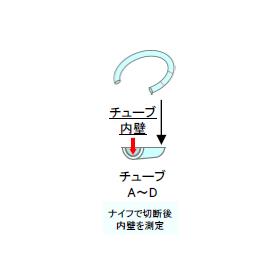
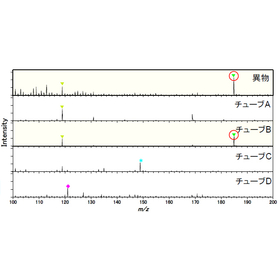
TOF-SIMS is a very effective method for investigating the causes of contamination due to foreign substances, deposits, dirt, discoloration, and other factors related to the process. By comparing the mass spectral information obtained from contamination such as foreign substances with the mass spectral information of candidate contamination source components, it is possible to infer the sources of that contamination. In this document, we prepared four types of resin tubes used in the wafer manufacturing process and foreign substances on Si wafers, and by comparing their mass spectral information, we evaluated which components used in the process the contamination from the foreign substances was attributed to.

  • img_C0740_2.jpg
  • img_C0740_3.jpg
  • Contract measurement
  • Contract Inspection
  • Time-of-flight mass spectrometer
  • Mass spectrometer

Added to bookmarks

Bookmarks list

Bookmark has been removed

Bookmarks list

You can't add any more bookmarks

By registering as a member, you can increase the number of bookmarks you can save and organize them with labels.

Free membership registration

[Analysis Case] Contamination Analysis in Vacuum Equipment

It is possible to evaluate the causes of contamination in vacuum devices, such as oil backs and grease!

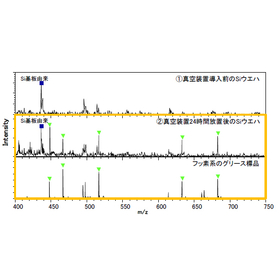
Vacuum devices that utilize the characteristic of low gas molecular density in a space are used in various applications such as thin film formation and surface analysis in the manufacturing process of electronic components. Since the chamber of a vacuum device is a closed space, the presence of trace amounts of molecules can easily cause contamination within the device. To suppress contamination, it is necessary to conduct investigations to identify contamination sources such as pumps, devices, and samples. This document presents a case study investigating contamination within a vacuum device using TOF-SIMS.

  • img_C0741_2.jpg
  • Contract measurement
  • Surface treatment contract service
  • Time-of-flight mass spectrometer
  • Mass spectrometer

Added to bookmarks

Bookmarks list

Bookmark has been removed

Bookmarks list

You can't add any more bookmarks

By registering as a member, you can increase the number of bookmarks you can save and organize them with labels.

Free membership registration

[Information] Rapid Identification of Microorganisms Using MALDI-TOF MS

Introduction to the principles, methods, specific examples of rapid microbial identification, as well as future challenges and applications in the food sector!

Today's food manufacturing is conducted in hygienically managed factories, where measures against foreign matter contamination and microbial contamination are important management issues. Packaging and containers utilize materials such as polymers, metals, and natural materials (like bamboo skin and leaves) that consider the characteristics of the food. Sterilization treatments, such as gamma irradiation, are performed as necessary to prevent microbial contamination. On the other hand, microorganisms adhering to food materials cannot be inspected visually and may proliferate after the product is filled. For more detailed information, please refer to the related catalog. [Contents (partial)] ■ Introduction ■ Overview and measurement principles of MALDI-TOF MS ■ Methods for identifying microorganisms using MALDI-TOF MS ■ Future challenges ■ Examples of applications in the food industry *For more details, please refer to the PDF document or feel free to contact us.

  • Other contract services
  • Sterilizer
  • Mass spectrometer

Added to bookmarks

Bookmarks list

Bookmark has been removed

Bookmarks list

You can't add any more bookmarks

By registering as a member, you can increase the number of bookmarks you can save and organize them with labels.

Free membership registration

Introduction to the Technical Note of the Mass Spectrometry Device ASTON

We will introduce various technical documents using the mass spectrometry device ASTON.

We would like to introduce a technical note using the mass spectrometer ASTON. < List of Technical Notes > 1. ASTON Technical Note_vol.2_Measurement of Krypton in Air 2. ASTON Technical Note_vol.3_Measurement of Tungsten Etching 3. ASTON Technical Note_vol.4_Reproducibility *Technical notes will be added as needed.

  • Other inspection equipment and devices
  • Mass spectrometer

Added to bookmarks

Bookmarks list

Bookmark has been removed

Bookmarks list

You can't add any more bookmarks

By registering as a member, you can increase the number of bookmarks you can save and organize them with labels.

Free membership registration